Cyber Attack Tabletop Exercises: A Simple Guide
A real breach is a terrible time to learn who does what. That is exactly what practice is for.
🔑 Key Takeaways
- Cyber attack tabletop exercises are guided practice runs of a security incident, done around a table instead of on live systems.
- They test whether your incident response plan works in real life, not just on paper.
- Everyone from the owner to the newest hire learns their role before a real crisis hits.
- You can start small and cheap, even as a one person business.
Most teams have never talked through a breach out loud. Cyber attack tabletop exercises fix that. They are simple, low cost, and one of the fastest ways to see if your plan holds up. In the next few minutes you will learn what cyber attack tabletop exercises are, why they matter, and how to run your first one without hiring an expensive consultant.
What Are Cyber Attack Tabletop Exercises?
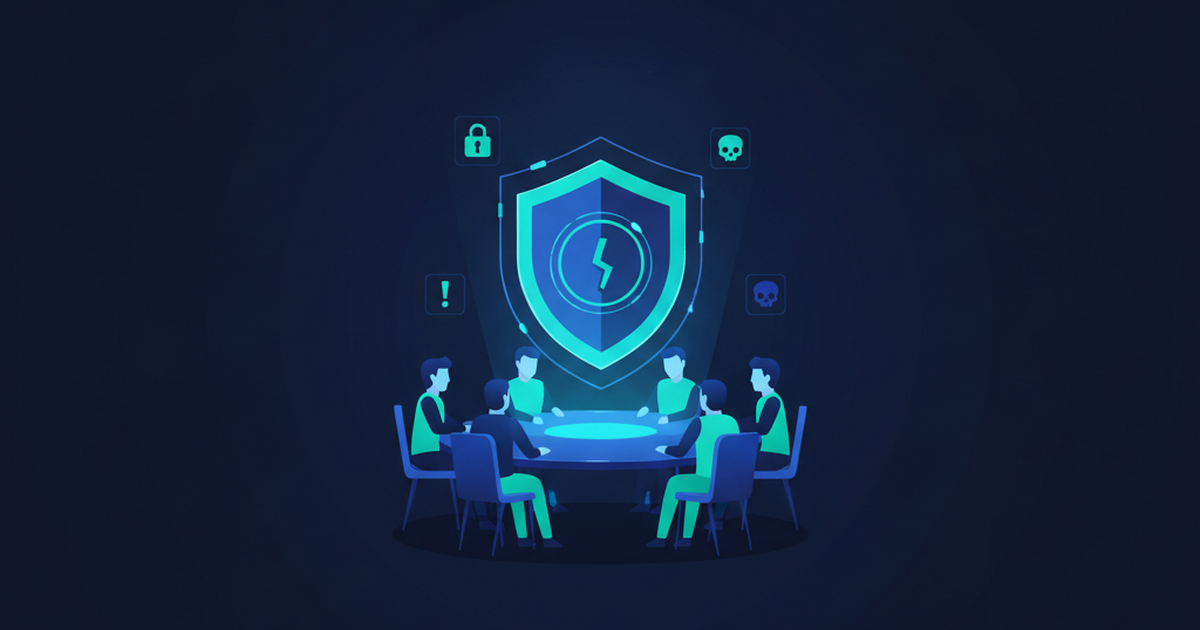
Cyber attack tabletop exercises are structured discussions where your team walks through a pretend security incident, step by step. Think of a fire drill, but for a hack. Nobody touches a real server. You sit around a table, a facilitator describes a threat, and each person says what they would do next.
The word tabletop is the key. The scenario plays out in conversation, not in your live systems. That makes these exercises safe. You can explore a worst case day with zero risk to your customers or your data.
An incident response plan is your written playbook for handling an attack: who to call, what to shut down, and how to talk to customers. Cyber attack tabletop exercises are how you test that playbook before you ever need it for real.
Why Cyber Attack Tabletop Exercises Matter
Any business can be a target. Attackers do not only chase banks and big brands. They chase whoever is unprepared. A ransomware attack can freeze a five person shop just as easily as a large firm.
Here is the hard truth. A plan you have never practiced is just a document. When the pressure is real, people forget steps, freeze, or step on each other. Practicing turns that document into muscle memory.
The best incident response plan is the one your team has already rehearsed. Practice removes panic, and panic is what attackers count on.
Running these sessions gives you clear, practical wins:
- You find gaps in your plan while it is cheap to fix them.
- Leaders and staff learn their roles before a crisis, not during one.
- Departments practice talking to each other under pressure.
- You get a short report you can use to justify future security spending.
What Happens During the Exercise
A facilitator leads the session. This can be an outside expert or a capable person inside your team. Their job is to keep the scenario realistic and to stop anyone from hand waving past a hard decision.
The facilitator describes an opening event. Maybe an employee clicked a bad link. Maybe files are suddenly encrypted. Then the group reacts, decision by decision. The facilitator adds twists as you go, which is how a good exercise exposes the messy middle of a real incident.
At the end you get an executive summary. It lists what went well, what broke down, and the exact fixes to make. That summary is the real prize. It turns a two hour conversation into a to do list that makes you safer.
How to Plan Cyber Attack Tabletop Exercises for a Small Business
You do not need a big budget to start. You need a scenario, the right people, and ninety focused minutes. Here is a simple path.
Pick a Realistic Scenario
Choose a threat that could actually hit you. For most small businesses that means ransomware, a phishing email that steals a login, or a stolen laptop. A scenario that could never happen to you teaches nothing.
Get the Right People in the Room
Invite the decision makers, not just the tech staff. The owner, whoever handles IT, and anyone who talks to customers should take part. Real incidents are business problems, so real people from the business need to practice them.
Run It, Then Debrief
Walk through the scenario without rushing. Let people make choices, then question those choices. Afterward, write down every gap you found. Feed those fixes back into your written plan, and into your disaster recovery plan so recovery is covered too.
Government agencies publish free guidance you can lean on. The US agency CISA offers incident response resources, and the UK’s National Cyber Security Centre has plain language advice for smaller teams. Pair that reading with regular cyber attack tabletop exercises and you build steady, lasting confidence.
Do not treat this as a one time event. Run cyber attack tabletop exercises once or twice a year, and after any big change to your tools or team. Backups matter too, so make sure you also protect your backups from ransomware before an incident forces the issue.
Common Scenarios Worth Practicing
A good scenario feels close to home. It should be something your business could plausibly face on a normal Tuesday. Start with one clear event, then let the group work through the fallout together.
These starting points work well for most small teams:
- Ransomware lockout: your files are suddenly encrypted and a payment demand appears on screen.
- Stolen login: an employee falls for a phishing email, and their account starts sending odd messages.
- Lost laptop: a device with saved passwords goes missing on a train.
- Fake invoice: finance receives a convincing request to change a supplier’s bank details.
For each one, ask the same simple questions. Who notices first? Who do they tell? What do you switch off, and who talks to customers? The value of cyber attack tabletop exercises shows up in these answers, because they reveal the small gaps that turn a bad hour into a bad week.
Mistakes to Avoid
A few traps can waste the whole session. Do not let one loud voice answer every question, since real incidents need the whole team. Do not skip the debrief, because the fixes are the entire point. And do not pick a scenario so extreme that nobody takes it seriously. Keep it realistic, keep it moving, and always end with a written list of what to improve.
Frequently Asked Questions
How long do cyber attack tabletop exercises take?
Most run between one and three hours. Ninety minutes is a good target for your first one. Keep it focused so people stay engaged the whole time.
Do I need to hire a consultant?
No. An outside facilitator adds an expert view, but a prepared person inside your team can run a solid first session using a simple written scenario.
How often should we run them?
Once or twice a year is a healthy rhythm for most small businesses. Also run one after major changes, like new software or a new office.
Who should take part?
Invite decision makers, not only tech staff. The owner, your IT person, and anyone who speaks with customers should all join.
What do we do with the results?
Turn every gap you found into a fix, then update your incident response plan. The written summary becomes your action list for the months ahead.