Store Your Crypto Safely: A Beginner’s Guide
Owning crypto is easy. Keeping it is the hard part. Here is how to hold your coins so only you can reach them.
🔑 Key Takeaways
- To store your crypto safely, control your own wallet instead of leaving coins on an exchange.
- Cold wallets stay offline and are best for large, long term holdings.
- Hot wallets are convenient for small, active amounts you use often.
- Your seed phrase is the master key. Guard it, and never share it.
Crypto keeps pulling in everyday investors, and attackers have noticed. To store your crypto safely, you cannot rely on luck or on someone else’s servers. Major exchanges have lost hundreds of millions of dollars to hacks and collapses, and when that happens, customer coins can vanish. This guide shows you how to store your crypto safely in plain language, so you keep control no matter what the market does.
Trading Versus Investing: Why It Changes How You Store Crypto
How you use crypto shapes how you should hold it. Traders buy and sell often, so they need quick access. Investors buy and hold for the long run, so they need deep protection instead of speed.
If you trade, it is smart to withdraw profits regularly and limit how much you leave exposed at any one time. If you invest, the goal is different. You want to store your crypto safely in a wallet that no company can freeze, seize, or lose for you.
Cold Wallets: The Safest Way to Store Your Crypto Safely
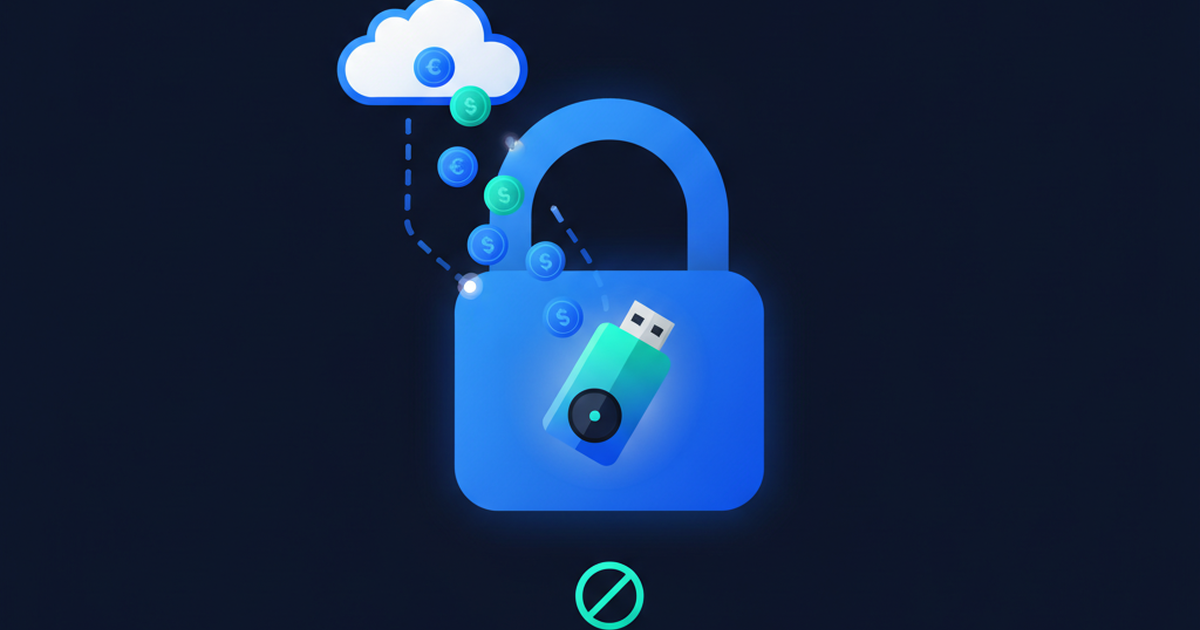
A cold wallet keeps your keys completely offline. Picture a small device, similar to a USB stick, that never touches the internet. Because it stays offline, remote hackers cannot reach it. This is the safest way to store your crypto safely, especially for larger amounts.
Cold storage is sometimes called a hardware wallet. Serious long term investors tend to prefer it. The trade off is convenience: you have to connect the device when you want to move funds. For money you plan to hold for years, that small hassle is worth it.
Hot Wallets: Convenient, but Handle With Care
A hot wallet is software that stays connected to the internet. It lives on your phone or computer and lets you send and receive coins in seconds. That speed is great for small, active balances.
The catch is that anything online carries more risk. Keep only what you need for daily use in a hot wallet. Think of it like the cash in your pocket, not the savings in your vault. To store your crypto safely, split your coins: a little in the hot wallet, the bulk in cold storage.
Not your keys, not your coins. If someone else holds the keys, they hold the power over your money.
The Dos: Habits That Keep Your Coins Yours
Good habits matter more than any single tool. Follow these to store your crypto safely over the long run:
- Use a wallet where you, and only you, control the private keys.
- Move large, long term holdings into cold storage.
- Write your seed phrase on paper and store it somewhere safe and private.
- Keep your device updated and protected with security software.
- Turn on two-factor authentication on every account tied to your crypto.
Attackers rarely break the blockchain itself. Instead, they target the device and the person. That is why strong basics, like updates and two-factor authentication, do so much of the work when you store your crypto safely.
The Don’ts: Red Lines You Should Never Cross
Do Not Leave Everything on an Exchange
When your coins sit on a centralized exchange, the exchange controls the wallet, not you. If it is hacked or collapses, your funds can go with it. A personal wallet is the safer home for anything you are not actively trading.
Do Not Share Your Private Keys or Seed Phrase
Your private keys and seed phrase are the master keys to your money. Anyone who has them can drain your wallet. No real support agent will ever ask for them. Keep them offline and to yourself.
Do Not Click Suspicious Links
Crypto scams often start with a message. A fake link can install malware or lead to a lookalike login page. Learn to spot the tricks in our guide to phishing red flags, and slow down before you click anything about your money. If you get scammed, you can report it through the US Federal Trade Commission at FTC.gov.
One more habit helps: check whether your email has appeared in a known breach using Have I Been Pwned. A leaked email often means more targeted scams, so reused passwords put your crypto at risk too.
A Simple Split: How Much to Keep Where
You do not have to choose one wallet type forever. Most people do best with a simple split between hot and cold storage. It keeps daily use easy while your long term savings stay locked down.
Here is an easy rule of thumb. Keep only what you plan to spend or trade this month in a hot wallet. Move the rest into cold storage, where it stays offline and out of reach. If your hot wallet is ever compromised, your losses are capped at that small amount.
Test your setup before you trust it with real money. Send a tiny amount to your new wallet, then send it back. Practice restoring the wallet from your seed phrase on a spare device. These small dry runs are how you store your crypto safely without a scary surprise later.
Back Up Your Seed Phrase the Right Way
Your seed phrase is the one thing you cannot afford to lose or leak. A photo on your phone is a bad idea, because a hacked phone hands it straight to a thief. Writing it on paper, kept somewhere private, is far safer.
For larger holdings, keep two paper copies in two separate secure places. That way a fire or a flood in one spot does not wipe you out. Simple, offline, and boring is exactly what you want here.
Frequently Asked Questions
What is the safest way to store your crypto safely?
For large, long term holdings, a cold wallet that stays offline is the safest choice. Keep only small, active amounts in an online hot wallet.
Is it safe to keep crypto on an exchange?
It is fine for coins you trade often, but risky for long term savings. If the exchange fails, you can lose access. Move big holdings to your own wallet.
What is a seed phrase?
It is a list of words that can restore your wallet. It is the master key. Write it on paper, store it privately, and never share it or type it into a website.
Can hackers steal coins from a hardware wallet?
It is very hard, because the device stays offline. Most theft comes from tricking you into revealing your seed phrase or clicking a bad link, not from breaking the device.
Do I need both a hot and a cold wallet?
Many people do. Use a hot wallet for everyday spending and a cold wallet for savings. Splitting funds this way helps you store your crypto safely without losing convenience.